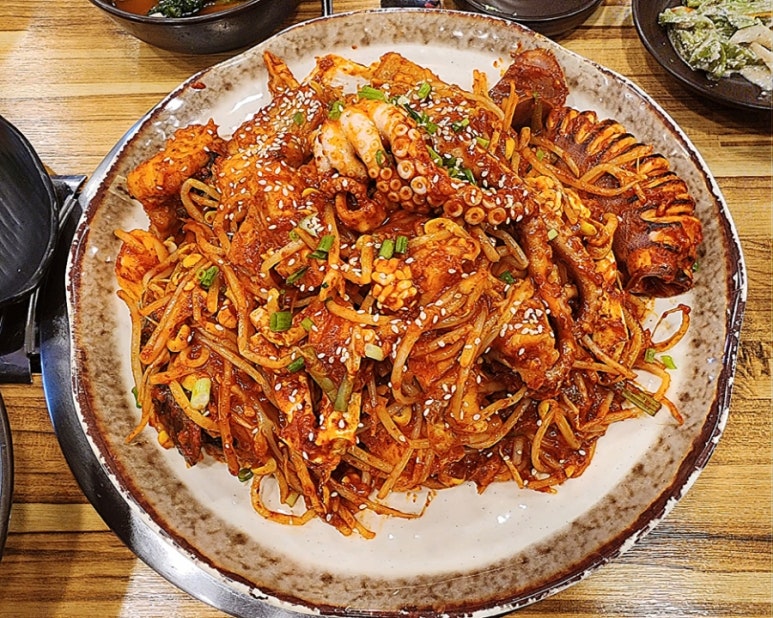

Haemul Jjim is a spicy Korean braised seafood dish made with squid, shrimp, mussels, clams, soybean sprouts, minari, onion, green onion, and a bold gochugaru-based sauce.
This dish is spicy, savory, rich, and full of seafood flavor. It is especially satisfying because you can enjoy different textures in one dish: chewy squid, juicy shrimp, briny shellfish, crunchy soybean sprouts, and fragrant minari.
Haemul Jjim looks generous and impressive, but it can be made with seafood that is easy to find at a local market or even frozen seafood from your freezer.
What is Haemul Jjim?
Haemul Jjim is Korean spicy braised seafood.
“Haemul” means seafood, and “jjim” refers to a Korean braised or steamed dish. Unlike a soup or stew, haemul jjim has a thicker, more concentrated sauce that coats the seafood and vegetables.
The dish is usually made with a mix of seafood, soybean sprouts, spicy seasoning, and starch water to create a thick and glossy sauce.
It is a popular Korean restaurant-style dish, but it can also be made at home with simple ingredients.
Recipe Information
Prep Time: 20 minutes
Cook Time: 10 to 15 minutes
Total Time: 30 minutes
Servings: 4
Difficulty: Easy
Cuisine: Korean
Main Ingredient: Mixed seafood
Best Served As: Korean main dish or drinking food
Ingredients
Main Ingredients
2 squid
500g shrimp
400g mussels
400g clams or other shellfish
2 cups water
2 tbsp kanari fish sauce
2 bags soybean sprouts
2 green onions
2 handfuls minari
1 onion
2 tbsp gochugaru
Sesame seeds, to taste
Starch Water
3 tbsp potato starch or cornstarch
5 tbsp water
Spicy Sauce
7 tbsp soy sauce
1 tbsp gochujang
7 tbsp gochugaru
2 tbsp sugar
2 tbsp cheongju, mirin, or cooking wine
2 tbsp minced garlic
Black pepper, to taste
Ingredient Notes
Squid
Squid adds a chewy texture and rich seafood flavor.
Clean the squid well and cut it into bite-sized pieces. Do not overcook it, because squid can become tough.
Shrimp
Shrimp adds sweetness and a firm, juicy texture.
If using whole shrimp, trim the whiskers and sharp parts with scissors. You can also remove the vein with a toothpick.
Mussels and Clams
Mussels and clams add deep briny flavor to the sauce.
Clean them well before cooking. If using clams, purge them first if needed.
Soybean Sprouts
Soybean sprouts are essential in haemul jjim.
They add crunch and volume, and they absorb the spicy sauce beautifully.
Use a generous amount because they shrink as they cook.
Minari
Minari, also known as Korean water parsley, adds a fresh herbal aroma.
Add it near the end so it keeps some freshness and texture.
Onion and Green Onion
Onion adds sweetness, while green onion adds aroma.
Both help balance the spicy seafood sauce.
Kanari Fish Sauce
Kanari fish sauce adds salty, savory depth.
If you do not have kanari fish sauce, you can use another Korean fish sauce.
Gochugaru
Gochugaru is the key ingredient for the spicy red color and heat.
This recipe uses gochugaru in the sauce and again near the end for extra color and flavor.
Gochujang
Gochujang adds body, depth, and mild sweetness.
Only 1 tablespoon is used because gochugaru is the main spicy ingredient in this dish.
Starch Water
Starch water thickens the sauce and gives haemul jjim its signature glossy texture.
Mix the starch and water well before adding it to the pan.
How to Make Haemul Jjim
Step 1: Prepare the Seafood
Prepare the squid, shrimp, mussels, and clams.
Clean all seafood well.
If using frozen seafood, thaw it first and drain excess water.
For shrimp, trim the whiskers and sharp parts if needed.
For clams, purge and rinse them well.
Step 2: Prepare the Vegetables
Rinse the soybean sprouts.
Slice the green onions.
Cut the minari into bite-sized lengths.
Slice the onion.
Set all vegetables aside.
Step 3: Make the Spicy Sauce
In a bowl, combine:
- 7 tbsp soy sauce
- 1 tbsp gochujang
- 7 tbsp gochugaru
- 2 tbsp sugar
- 2 tbsp cheongju, mirin, or cooking wine
- 2 tbsp minced garlic
- Black pepper, to taste
Mix well until the sauce becomes thick and evenly combined.
This amount is enough for a generous 4-person portion.
Step 4: Make the Starch Water
In a small bowl, mix:
- 3 tbsp starch
- 5 tbsp water
Stir well until smooth.
Set aside and stir again right before using, because starch settles quickly.
Step 5: Cook the Seafood
Place the prepared seafood in a large pan or wide pot.
Heat the pan until steam begins to rise.
Add 2 cups of water.
Add 2 tbsp kanari fish sauce.
Boil until the shrimp turns red and the squid becomes slightly translucent.
Step 6: Add Some Sauce First
Add about 2 tablespoons of the prepared spicy sauce.
Continue boiling.
This gives the seafood an early layer of seasoning before the vegetables are added.
Step 7: Add the Soybean Sprouts
When the shellfish begin to open, add the rinsed soybean sprouts generously on top.
Do not worry if the pan looks full. The soybean sprouts will shrink as they cook.
Step 8: Add the Remaining Sauce
Add the rest of the spicy sauce.
Gently mix everything together.
Be careful not to break the seafood or crush the soybean sprouts too much.
Step 9: Add Minari, Onion, and Green Onion
When the soybean sprouts begin to soften, add the minari, onion, and green onion.
Toss gently so the vegetables mix with the seafood and sauce.
Step 10: Add Extra Gochugaru
Sprinkle 2 tbsp gochugaru over the top.
Mix again.
This adds stronger color, aroma, and spicy flavor.
Step 11: Thicken with Starch Water
Stir the starch water again.
Slowly pour it into the pan while gently mixing.
Keep stirring until the sauce thickens and becomes glossy.
The sauce should coat the seafood and vegetables rather than remain watery.
Step 12: Finish and Serve
When the sauce becomes thick and the mixture feels slightly heavy while stirring, turn off the heat.
Transfer the haemul jjim to a large serving plate.
Sprinkle sesame seeds over the top.
Serve hot.
Pro Tips
Use a Wide Pan
Haemul jjim contains a lot of seafood and vegetables.
A wide pan or wok makes it easier to mix everything without breaking the ingredients.
Do Not Overcook the Seafood
Seafood cooks quickly.
Overcooked squid can become tough, and shrimp can become rubbery.
Cook just until the seafood is done, then focus on thickening the sauce.
Add Soybean Sprouts Generously
Soybean sprouts shrink a lot during cooking.
Even if two bags look like too much at first, they will reduce in volume.
Add Minari Near the End
Minari tastes best when it stays slightly fresh and aromatic.
Add it near the end instead of cooking it from the beginning.
Control the Thickness with Starch Water
Add starch water gradually.
If you add too much at once, the sauce may become too thick.
Pour slowly and stir until you reach the texture you want.
Use Frozen Seafood If Needed
This recipe works well with frozen seafood.
Just thaw and drain it well before cooking so the dish does not become watery.
Make It Spicier
For a spicier version, add more gochugaru or sliced Cheongyang chili peppers.
What to Serve with Haemul Jjim
Haemul Jjim pairs well with:
- Steamed white rice
- Kimchi
- Kongnamul Guk
- Miyeokguk
- Gyeran Jjim
- Korean pickled onions
- Musaengchae
- Oi Muchim
- Myeolchi Bokkeum
- Soju
- Makgeolli
It is also delicious as a shared main dish for family meals or casual gatherings.
Storage Tips
Haemul Jjim tastes best when freshly cooked.
Seafood can become tough after reheating, so it is best to enjoy it right away.
If you have leftovers, store them in an airtight container in the refrigerator.
Eat within 1 day for the best texture and flavor.
To reheat, warm gently in a pan over low heat.
Add a small splash of water if the sauce has become too thick.
Freezing is not recommended because seafood and soybean sprouts can lose their texture after thawing.
Frequently Asked Questions
Can I use frozen seafood?
Yes.
Frozen seafood works well for this recipe.
Thaw it first, drain it well, and remove excess moisture before cooking.
Can I use different seafood?
Yes.
You can use octopus, crab, scallops, or other shellfish.
Use seafood that is easy to find and adjust the cooking time depending on the ingredient.
What can I use instead of kanari fish sauce?
You can use another Korean fish sauce.
If you do not have fish sauce, you can use a small amount of soy sauce, but the flavor will be less deep.
Is this dish very spicy?
It is spicy, but you can adjust the heat.
Use less gochugaru for a milder version, or add Cheongyang chili peppers for more heat.
Why is my haemul jjim watery?
The seafood or vegetables may have released too much moisture.
Simmer a little longer before adding starch water, and make sure frozen seafood is well drained.
Why did my sauce become too thick?
Too much starch water may have been added.
Add a little water and mix gently to loosen the sauce.
Can I make this without minari?
Yes.
Minari gives the dish a fresh Korean flavor, but you can skip it if unavailable.
You can also use a small amount of crown daisy or extra green onion.
Can I make this ahead of time?
It is not ideal.
Haemul Jjim is best served immediately because seafood and soybean sprouts taste best when freshly cooked.
You can prepare the sauce and clean the seafood in advance, then cook everything right before serving.
Final Thoughts
Haemul Jjim is a bold and generous Korean spicy braised seafood dish made with squid, shrimp, mussels, clams, soybean sprouts, minari, onion, green onion, and a thick red spicy sauce.
It is full of flavor and texture, from chewy squid and juicy shrimp to crunchy soybean sprouts and fragrant minari. The starch water gives the sauce its glossy, restaurant-style finish.
The key is to clean the seafood well, cook it just until done, add plenty of soybean sprouts, and thicken the sauce gradually.
If you want a spicy Korean seafood dish that is hearty, impressive, and perfect for sharing, this Haemul Jjim recipe is an excellent choice.
답글 남기기