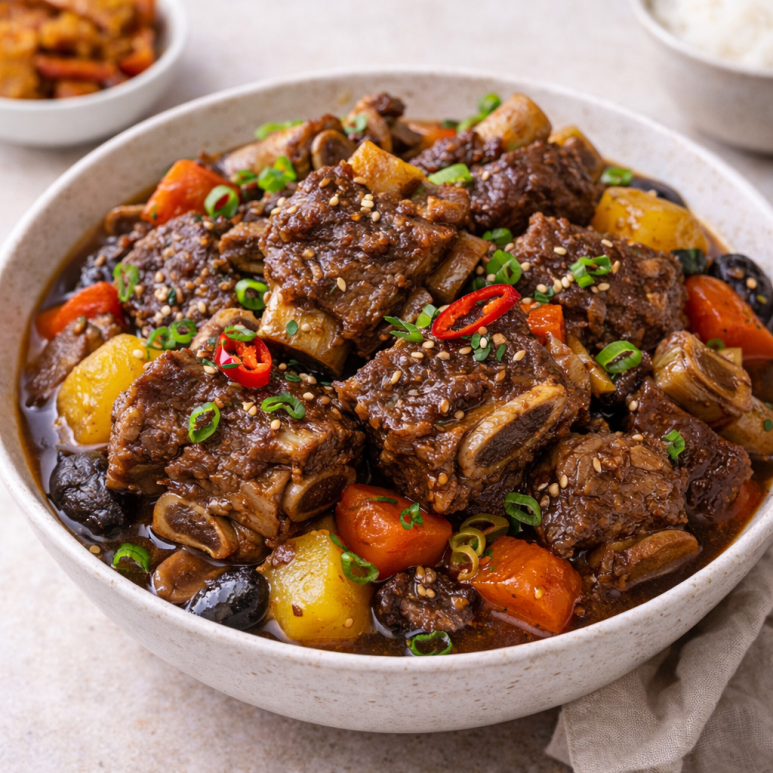

Galbijjim is a classic Korean braised short rib dish made with beef short ribs, radish, carrot, green onion, pear, onion, soy sauce, garlic, cooking wine, sugar, and sesame oil.
This dish is rich, savory, slightly sweet, and deeply comforting. The beef short ribs are soaked to remove blood, briefly parboiled to remove impurities, marinated in a soy sauce-based sauce, and slowly braised until tender.
Galbijjim is often served for birthdays, holidays, family gatherings, and special Korean meals. It looks impressive on the table, but the process is simple if you follow each step carefully.
What is Galbijjim?
Galbijjim is Korean braised beef short ribs.
“Galbi” means ribs, and “jjim” refers to a Korean braised or steamed dish. Unlike grilled galbi, galbijjim is slowly cooked in a savory-sweet sauce until the meat becomes tender and flavorful.
This version uses pear and onion in the marinade. Pear helps tenderize the meat naturally, while onion adds sweetness and depth. Radish and carrot absorb the sauce as they cook, making the dish even more satisfying.
Galbijjim is one of the most popular Korean celebration dishes and is often served on birthday tables or holiday meals.
Recipe Information
Prep Time: 4 hours
Cook Time: 1 hour 30 minutes to 2 hours
Total Time: 5 to 6 hours, including soaking time
Servings: 4
Difficulty: Easy to Moderate
Cuisine: Korean
Main Ingredient: Beef short ribs
Best Served For: Birthday meals, holidays, family dinners, and special occasions
Ingredients
Main Ingredients
800g to 900g beef short ribs
2 thick pieces Korean radish, about 5cm thick
1/2 carrot
1 green onion
1 cup water, if using a regular pot
Marinade Ingredients
1/2 Korean pear
1/2 onion
2 tbsp minced garlic
10 tbsp soy sauce
2 tbsp oligosaccharide syrup
1 tbsp oyster sauce
5 tbsp cooking wine
4 tbsp cheongju or rice wine
2 tbsp sugar
0.3 tbsp minced ginger
0.3 tbsp black pepper
0.5 tbsp sesame oil
Optional Add-Ins
Jujubes
Chestnuts
Shiitake mushrooms
Ginkgo nuts
Ingredient Notes
Beef Short Ribs
Beef short ribs are the main ingredient of galbijjim.
Choose meaty short ribs if possible. Soaking them in cold water helps remove blood and gives the final dish a cleaner taste.
For best results, soak the ribs for 3 to 4 hours and change the water several times.
Korean Radish
Korean radish becomes soft and sweet as it cooks.
It absorbs the braising sauce and balances the richness of the beef.
Cut the radish into large pieces so it does not break apart too quickly.
Carrot
Carrot adds color and gentle sweetness.
For a cleaner presentation, round the edges slightly after cutting. This helps prevent the carrot from breaking during braising.
Pear
Pear is commonly used in Korean meat marinades.
It adds natural sweetness and helps tenderize the beef.
If you do not have pear, kiwi can be used, but use it carefully because kiwi tenderizes meat very quickly.
Onion
Onion adds sweetness and depth to the sauce.
Blending onion with pear creates a smooth marinade that coats the ribs well.
Soy Sauce
Soy sauce is the base of the galbijjim seasoning.
It provides saltiness and savory depth.
Oyster Sauce
Oyster sauce adds extra umami and richness.
Only a small amount is needed.
Cooking Wine and Rice Wine
Cooking wine and rice wine help reduce beef odor and add depth to the sauce.
They also make the braising sauce taste smoother.
Oligosaccharide Syrup
Oligosaccharide syrup adds sweetness and gives the sauce a glossy finish.
You can also use corn syrup or Korean cooking syrup.
Sesame Oil
Sesame oil adds nutty aroma.
Use a small amount because galbijjim should taste rich but not oily.
How to Make Galbijjim
Step 1: Soak the Beef Short Ribs
Place the beef short ribs in a large bowl.
Cover them with cold water.
Soak for 3 to 4 hours to remove excess blood.
Change the water 3 to 4 times during soaking.
This step helps remove strong beef odor and gives the dish a cleaner flavor.
Step 2: Parboil the Ribs
Fill a pot with water and bring it to a boil.
Once the water is boiling, add the soaked beef short ribs.
Boil for about 3 minutes.
This removes impurities, blood residue, and excess fat from the ribs.
Step 3: Rinse the Ribs
Remove the parboiled ribs from the pot.
Rinse them under cold water.
Clean off any foam, bone fragments, or impurities.
Drain well.
Step 4: Blend the Pear and Onion
Place 1/2 pear and 1/2 onion in a blender.
Blend until smooth.
Transfer the blended mixture to a bowl.
Step 5: Make the Marinade
To the blended pear and onion, add:
- 2 tbsp minced garlic
- 10 tbsp soy sauce
- 2 tbsp oligosaccharide syrup
- 1 tbsp oyster sauce
- 5 tbsp cooking wine
- 4 tbsp rice wine
- 2 tbsp sugar
- 0.3 tbsp minced ginger
- 0.3 tbsp black pepper
- 0.5 tbsp sesame oil
Mix well until the marinade is evenly combined.
Step 6: Marinate the Ribs
Pour the marinade over the cleaned beef short ribs.
Mix so the ribs are evenly coated.
For the best flavor, cover and refrigerate overnight.
If you do not have time, you can cook the ribs right away, but overnight marinating gives a deeper flavor.
Step 7: Prepare the Vegetables
Cut the Korean radish into large chunks.
Cut the carrot into large pieces.
Round the edges of the radish and carrot if you want a neater presentation.
Slice the green onion diagonally.
Prepare optional jujubes, chestnuts, or mushrooms if using.
Step 8: Start Braising
Place the marinated beef short ribs and marinade into a pot.
Add 1 cup of water if using a regular pot.
Cover with a lid.
Cook until the beef becomes tender.
For a pressure cooker, do not add extra water because too much liquid can weaken the flavor.
Step 9: Remove Excess Fat
Once the beef is mostly cooked, open the lid.
Use a spoon to skim off excess fat from the surface.
This makes the final sauce cleaner and less greasy.
Step 10: Add Radish and Carrot
Add the prepared radish and carrot to the pot.
Continue cooking until the vegetables become tender and the sauce reduces.
The liquid should become slightly thick and flavorful.
Step 11: Add Green Onion
Add the sliced green onion near the end.
Cook briefly until the green onion softens slightly.
Do not overcook it, because green onion tastes best when it still has some freshness.
Step 12: Serve
Turn off the heat.
Transfer the galbijjim to a serving dish.
Serve hot with steamed rice and Korean side dishes.
Pro Tips
Soak the Ribs Long Enough
Soaking the ribs for 3 to 4 hours removes blood and helps reduce odor.
Change the water several times for the cleanest flavor.
Parboil Before Braising
Do not skip the parboiling step.
It removes impurities and helps the braising sauce stay clean and glossy.
Marinate Overnight If Possible
Galbijjim tastes much better when the ribs absorb the marinade overnight.
This is especially useful when preparing the dish for a birthday meal or guest dinner.
Use Pear for Tender Meat
Pear adds natural sweetness and helps tenderize the beef.
If using kiwi instead, use a small amount and do not marinate for too long, because kiwi can make the meat too soft.
Skim the Fat
Beef short ribs release fat as they cook.
Skimming the fat makes the dish cleaner and more elegant.
Add Vegetables After the Meat Starts to Soften
Radish and carrot can break apart if cooked for too long.
Add them after the beef is already partly tender.
Reduce the Sauce Gently
Galbijjim should not be watery.
Simmer until the sauce becomes rich and lightly coats the ribs and vegetables.
What to Serve with Galbijjim
Galbijjim pairs well with:
- Steamed white rice
- Kimchi
- Miyeokguk
- Kongnamul Guk
- Japchae
- Gyeran Jjim
- Korean pickled onions
- Musaengchae
- Oi Muchim
- Dubu Jorim
- Korean vegetable side dishes
For a birthday meal, galbijjim is especially good with miyeokguk, rice, japchae, and a few simple banchan.
Storage Tips
Store leftover galbijjim in an airtight container in the refrigerator.
It is best eaten within 2 to 3 days.
To reheat, place the ribs and sauce in a pot and warm over low to medium heat.
Add a small splash of water if the sauce has become too thick.
Galbijjim often tastes even better the next day because the meat absorbs more sauce.
Freezing is possible, but the radish and carrot may become softer after thawing.
Frequently Asked Questions
Can I make galbijjim without pear?
Yes.
You can skip pear or replace it with a small amount of grated apple.
Pear gives the best traditional flavor and helps tenderize the meat.
Can I use kiwi instead of pear?
Yes, but use kiwi carefully.
Kiwi tenderizes meat strongly, so too much kiwi or too much marinating time can make the meat mushy.
Do I have to marinate the ribs overnight?
No.
You can cook the ribs right after adding the marinade, but overnight marinating gives a deeper and better flavor.
Why do I need to soak the ribs?
Soaking removes excess blood from the beef.
This helps reduce odor and gives the final dish a cleaner taste.
Why do I need to parboil the ribs?
Parboiling removes impurities, foam, and excess fat.
It also helps the braising sauce stay cleaner.
Can I make this in a pressure cooker?
Yes.
A pressure cooker makes the beef more tender in less time.
If using a pressure cooker, do not add extra water because the marinade and meat will release liquid during cooking.
Can I add chestnuts or jujubes?
Yes.
Chestnuts, jujubes, mushrooms, and ginkgo nuts are common additions for special occasion galbijjim.
They make the dish look more festive.
Why is my galbijjim too salty?
The sauce may have reduced too much.
Add a little water and simmer briefly to balance the flavor.
Next time, reduce the sauce more slowly and taste as it cooks.
Why is my beef still tough?
The ribs need more time.
Continue simmering until the meat becomes tender.
Add a little water if the sauce reduces before the beef is fully cooked.
Final Thoughts
Galbijjim is one of the most beloved Korean braised beef dishes, often served for birthdays, holidays, and special family meals.
The combination of beef short ribs, pear, onion, soy sauce, garlic, cooking wine, rice wine, radish, carrot, and green onion creates a rich, savory, slightly sweet dish that feels both comforting and special.
The key is to soak the ribs well, parboil and rinse them, marinate them for deeper flavor, and braise slowly until the meat becomes tender and the sauce reduces.
If you want a Korean birthday meal or celebration dish that is impressive, hearty, and deeply flavorful, this Galbijjim recipe is an excellent choice.
답글 남기기