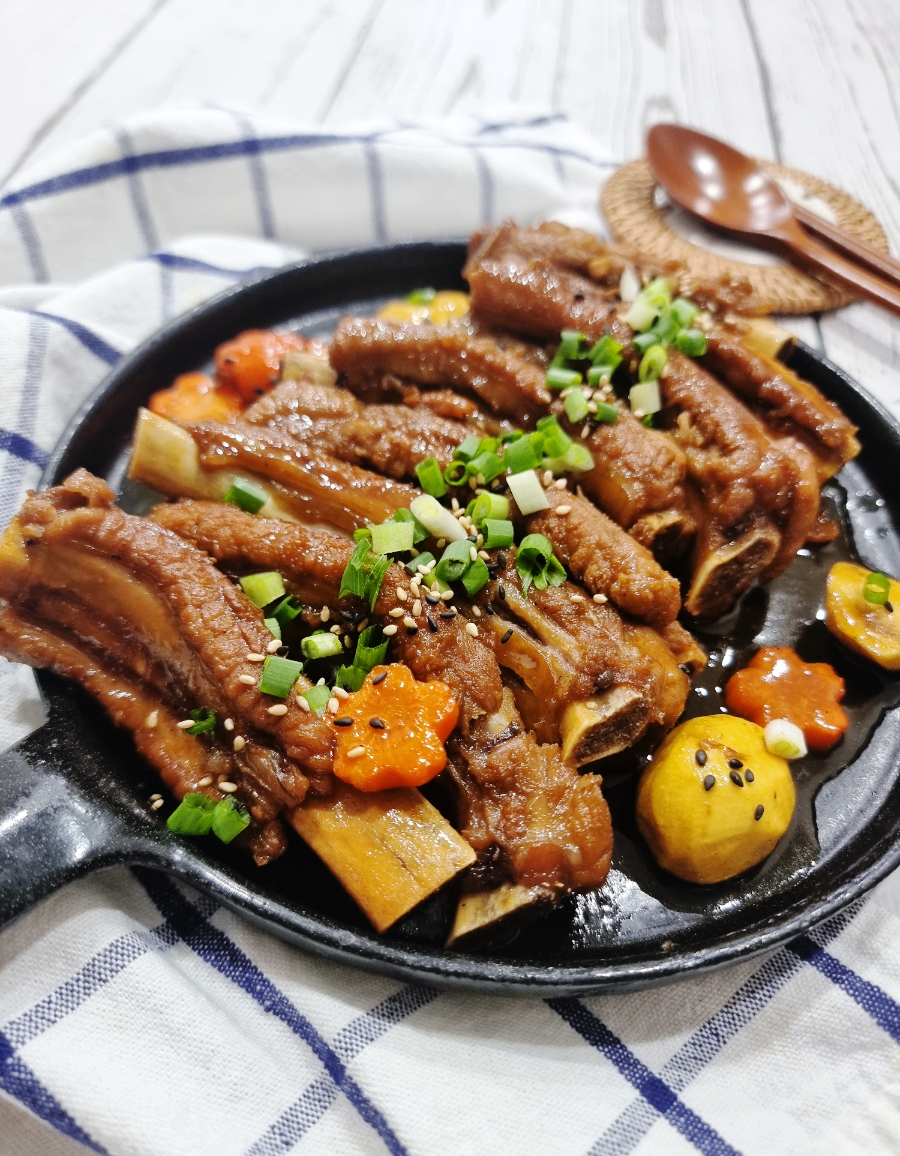

Soy Sauce Braised Pork Back Ribs, also known as Korean Dwaeji Deunggalbi Jjim, is a savory and slightly sweet Korean braised pork rib dish made with pork back ribs, soy sauce, garlic, sugar, plum extract, cooking wine, sesame oil, and syrup.
This recipe is rich, tender, glossy, and perfect as a Korean dinner main dish. The pork ribs are first parboiled with bay leaves and peppercorns to remove impurities, then braised in a soy sauce-based seasoning until the sauce reduces and coats the ribs beautifully.
It is a great dish for guests, family dinners, holidays, or any meal where you want a satisfying Korean meat dish that pairs perfectly with steamed rice.
What is Dwaeji Deunggalbi Jjim?
Dwaeji Deunggalbi Jjim is a Korean braised pork back rib dish.
“Dwaeji” means pork, “deunggalbi” means pork back ribs, and “jjim” refers to a Korean braised or steamed dish.
Unlike spicy pork rib dishes, this version uses a soy sauce-based seasoning. The flavor is savory, slightly sweet, garlicky, and comforting. As the ribs simmer, the sauce reduces into a glossy glaze and the meat becomes tender.
This dish is especially good when served as the main dish for a Korean-style dinner table.
Recipe Information
Prep Time: 20 minutes
Cook Time: 40 minutes
Total Time: 60 minutes
Servings: 3
Difficulty: Easy to Moderate
Cuisine: Korean
Main Ingredient: Pork back ribs
Best Served With: Steamed rice
Ingredients
Main Ingredients
600g pork back ribs
A few bay leaves
A few whole black peppercorns
5 whole garlic cloves
Optional chopped green onion or chives, for garnish
Sesame seeds, for garnish
Soy Sauce Braising Sauce
350ml water
2 tbsp sugar
4 tbsp soy sauce
1 tbsp plum extract
2 tbsp corn syrup or Korean cooking syrup
2 tbsp cooking wine
1 tbsp sesame oil
2 tbsp minced garlic
Ingredient Notes
Pork Back Ribs
Pork back ribs are tender, flavorful, and perfect for braising.
Cutting them evenly helps the ribs cook at the same speed. For braising, it is better to cut between the meat portions so each piece has a good balance of meat and bone.
Soaking the ribs in cold water before cooking helps remove excess blood and gives the final dish a cleaner flavor.
Bay Leaves and Whole Peppercorns
Bay leaves and whole peppercorns are used when parboiling the ribs.
They help reduce pork odor and make the meat taste cleaner.
If you do not have whole peppercorns, you can use a little instant coffee or leftover soju when parboiling the ribs.
Soy Sauce
Soy sauce is the base of the braising sauce.
It gives the dish deep savory flavor and saltiness.
Plum Extract
Plum extract adds gentle sweetness and a light fruity acidity.
It helps balance the richness of the pork.
Corn Syrup or Korean Cooking Syrup
Syrup gives the sauce sweetness and a glossy finish.
If you do not have corn syrup, you can use oligosaccharide syrup or honey.
Cooking Wine
Cooking wine helps reduce pork smell and adds depth to the sauce.
Mirin or Korean cooking wine both work well.
Garlic
This recipe uses both minced garlic and whole garlic cloves.
Minced garlic flavors the sauce, while whole garlic cloves become soft and sweet as they braise.
Sesame Oil
Sesame oil adds nutty aroma and makes the sauce taste richer.
Add it as part of the sauce for a deeper Korean flavor.
How to Make Soy Sauce Braised Pork Back Ribs
Step 1: Prepare the Pork Back Ribs
Prepare 600g of pork back ribs.
If the ribs are not already cut, cut them into even pieces.
For braising, cut through the meat sections so the pieces cook evenly and are easy to serve.
Step 2: Soak the Ribs
Place the ribs in a bowl of cold water.
Let them soak to remove excess blood.
If the water becomes cloudy or red, change the water once.
This step helps reduce pork odor and gives the dish a cleaner taste.
Step 3: Parboil the Ribs
Bring a pot of water to a boil.
Add a few bay leaves and whole black peppercorns.
Add the pork back ribs and boil briefly.
This removes impurities from the meat.
Step 4: Rinse the Ribs
Drain the parboiled ribs.
Rinse them under clean water.
Remove any foam or impurities from the surface.
Place the cleaned ribs in a wok or pot.
Step 5: Make the Soy Sauce Braising Sauce
In a bowl, combine:
- 350ml water
- 2 tbsp sugar
- 4 tbsp soy sauce
- 1 tbsp plum extract
- 2 tbsp corn syrup
- 2 tbsp cooking wine
- 1 tbsp sesame oil
- 2 tbsp minced garlic
Mix well until the sugar is mostly dissolved.
Step 6: Add the Sauce to the Ribs
Pour the prepared sauce over the ribs in the wok or pot.
Add 5 whole garlic cloves.
If you have sliced green onion, you can add a little at this stage, but it is optional.
Step 7: Braise Over High Heat
Turn the heat to high.
Bring the sauce to a boil.
Cook over high heat for about 30 minutes.
As the sauce boils, the ribs will absorb the seasoning and the liquid will begin to reduce.
Step 8: Reduce the Heat
When the sauce becomes slightly reduced, lower the heat to medium-low.
Continue simmering slowly.
This helps the ribs become tender and allows the sauce to thicken without burning.
Step 9: Reduce Until Glossy
Keep braising until the sauce becomes thick, glossy, and coats the ribs.
Spoon the sauce over the ribs occasionally while cooking.
This helps the flavor cover the meat evenly.
Step 10: Garnish and Serve
Transfer the braised pork back ribs to a serving plate.
Sprinkle with chopped chives or green onion if desired.
Finish with plenty of sesame seeds.
Serve hot with steamed rice.
Pro Tips
Soak the Ribs Before Cooking
Soaking the ribs removes excess blood and helps prevent a strong pork smell.
This is an important step for a cleaner-tasting braised rib dish.
Do Not Skip the Parboiling Step
Parboiling removes impurities and foam from the pork.
After parboiling, rinse the ribs well before braising them in the sauce.
Use Bay Leaves and Peppercorns
Bay leaves and peppercorns help reduce odor when boiling pork.
If you do not have peppercorns, a small amount of soju or instant coffee can also help.
Start on High Heat, Finish on Lower Heat
High heat helps the sauce boil and reduce quickly at first.
Once the liquid becomes lower, reduce the heat so the sauce does not burn.
Simmer Until the Sauce Coats the Ribs
This dish tastes best when the sauce is not watery.
Let it reduce until the ribs look glossy and well-coated.
Taste Before Adding More Salt
Soy sauce gives enough saltiness, and the sauce becomes stronger as it reduces.
Taste near the end before adding any extra seasoning.
What to Serve with Soy Sauce Braised Pork Back Ribs
Soy Sauce Braised Pork Back Ribs pair well with:
- Steamed white rice
- Kimchi
- Kongnamul Guk
- Miyeokguk
- Korean pickled onions
- Musaengchae
- Gyeran Jjim
- Gamja Jorim
- Eomuk Bokkeum
- Myeolchi Bokkeum
- Lettuce wraps
- Korean vegetable side dishes
This dish works well as the main protein for a Korean dinner table.
Storage Tips
Store leftover braised pork back ribs in an airtight container in the refrigerator.
They are best eaten within 2 to 3 days.
To reheat, place the ribs and sauce in a pot and warm over low heat.
Add a small splash of water if the sauce has become too thick.
You can also reheat them in the microwave, but reheating in a pot gives the best texture.
Freezing is possible, but the sauce texture and meat moisture may change slightly after thawing.
Frequently Asked Questions
Can I use regular pork ribs instead of pork back ribs?
Yes.
You can use regular pork ribs, but the cooking time may vary depending on the size and thickness of the ribs.
Do I have to soak the ribs?
It is highly recommended.
Soaking helps remove blood and gives the final dish a cleaner flavor.
Why do I need to parboil the ribs?
Parboiling removes impurities, foam, and excess odor from the pork.
It makes the braising sauce cleaner and more pleasant.
Can I make this without plum extract?
Yes.
If you do not have plum extract, you can skip it or replace it with a small amount of extra cooking wine or syrup.
The flavor will be slightly different, but the dish will still be delicious.
What can I use instead of corn syrup?
You can use oligosaccharide syrup, Korean cooking syrup, honey, or maple syrup.
Syrup helps create a glossy finish.
Can I add vegetables?
Yes.
Carrot, potato, onion, mushrooms, or Korean radish can be added.
If using vegetables that soften quickly, add them later so they do not fall apart.
Why is my sauce too salty?
The sauce may have reduced too much.
Add a small splash of water and simmer briefly to balance it.
Next time, reduce the sauce more slowly and taste as it cooks.
Why is my pork still tough?
It may need more time.
Continue simmering over medium-low heat until the meat becomes tender.
Add more water if the sauce reduces before the ribs are fully tender.
Final Thoughts
Soy Sauce Braised Pork Back Ribs are a rich, savory, and slightly sweet Korean pork rib dish that works beautifully as a dinner main dish or guest-worthy meal.
The ribs are soaked, parboiled with bay leaves and peppercorns, rinsed clean, and then braised in a soy sauce-based sauce with garlic, sugar, plum extract, syrup, cooking wine, and sesame oil.
The key is to clean the ribs well, start the braising over high heat, then reduce the heat as the sauce thickens. When the sauce becomes glossy and coats the ribs, the dish is ready.
If you want a Korean pork rib recipe that is comforting, flavorful, and impressive enough for guests, this Soy Sauce Braised Pork Back Ribs recipe is an excellent choice.
답글 남기기