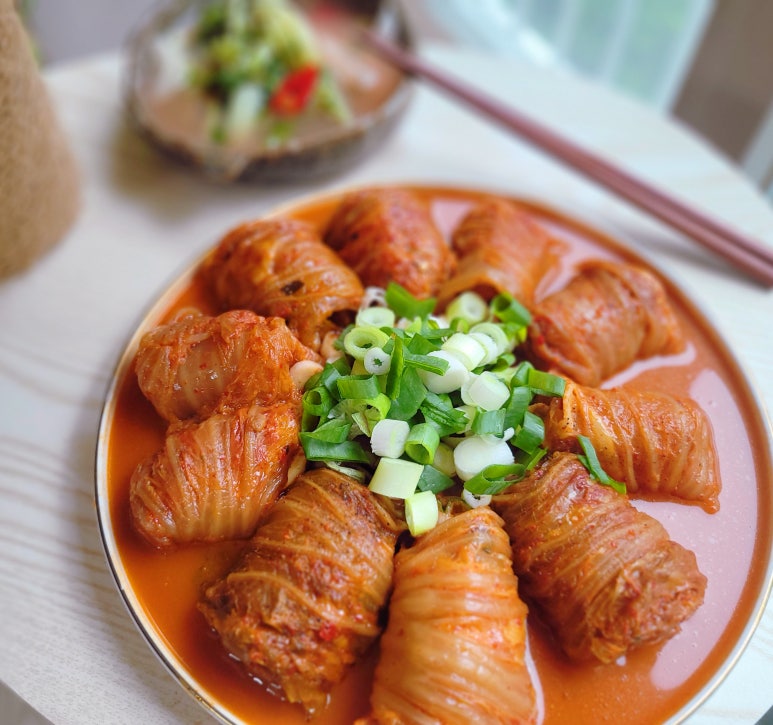

Samgyeopsal Kimchi Mari Jjim is a Korean braised dish made by rolling pork belly inside kimchi leaves, then simmering the rolls in a rich broth with green onion, chili peppers, and gochujang.
This dish looks impressive, but it is surprisingly simple to make. The pork belly becomes tender and juicy, the kimchi turns soft and deeply flavorful, and the broth becomes rich, spicy, savory, and comforting.
It is a great Korean main dish for family meals, housewarming parties, dinner gatherings, or any time you want a hearty dish that pairs perfectly with steamed rice.
What is Samgyeopsal Kimchi Mari Jjim?
Samgyeopsal Kimchi Mari Jjim is a Korean braised pork belly and kimchi roll dish.
The word “samgyeopsal” means pork belly, “kimchi” means fermented Korean cabbage, “mari” means rolled, and “jjim” means braised or steamed dish.
The basic idea is simple: wrap pork belly with kimchi, place the rolls in a pot, add broth, and simmer until everything becomes tender and flavorful.
This dish is similar in flavor to kimchi jjim, but the rolled shape makes it more attractive and easier to serve.
Recipe Information
Prep Time: 15 minutes
Cook Time: 30 minutes
Total Time: 45 minutes
Servings: 4
Difficulty: Easy
Cuisine: Korean
Main Ingredient: Pork belly and kimchi
Best Served With: Steamed white rice
Ingredients
Main Ingredients
About 1.2kg pork belly
1/2 head napa cabbage kimchi
2 green onions
1 red chili pepper
2 Cheongyang chili peppers
2 packs store-bought beef bone broth
1 tbsp gochujang
Ingredient Notes
Pork Belly
Pork belly gives this dish a rich and juicy flavor.
If the pork belly strips are too long, cut them in half before rolling. Smaller pieces are easier to roll, cook, and eat.
Kimchi
Use napa cabbage kimchi with large leaves.
Well-fermented kimchi gives the best flavor because it becomes soft and tangy as it simmers.
If the kimchi leaves are too large, cut them in half. If they are small, you can use them as they are.
Beef Bone Broth
Store-bought beef bone broth makes this recipe easy and flavorful.
Most packaged bone broths are already seasoned, so you usually do not need to add extra salt or soy sauce.
Gochujang
Gochujang adds depth, mild heat, and a richer red color to the broth.
Only 1 tablespoon is enough because kimchi and bone broth already have strong flavor.
Green Onion
Green onion adds aroma and freshness.
It also helps balance the richness of the pork belly.
Chili Peppers
Red chili pepper adds color, while Cheongyang chili pepper adds heat.
Use more or less depending on how spicy you want the dish to be.
How to Make Samgyeopsal Kimchi Mari Jjim
Step 1: Prepare the Pork Belly and Kimchi
Prepare pork belly and half a head of kimchi.
Cut the pork belly strips in half if they are too long.
Cut large kimchi leaves in half if needed.
The rolls should be small enough to fit comfortably in the pot and easy to eat.
Step 2: Prepare the Vegetables
Slice the green onions.
Slice the red chili pepper.
Slice the Cheongyang chili peppers.
Set them aside.
Step 3: Roll the Pork Belly with Kimchi
Place one kimchi leaf flat on a cutting board.
Place a piece of pork belly on top of the kimchi.
Roll it tightly from the inside of the kimchi leaf to the outer edge.
Repeat until all the pork belly and kimchi are used.
Step 4: Arrange the Rolls in a Pot
Place the kimchi pork belly rolls in a pot.
Arrange them in a circular pattern if possible.
Try to place them snugly so they hold their shape while cooking.
Step 5: Add the First Pack of Broth
Pour in one pack of store-bought beef bone broth.
The broth should come up around the rolls.
If needed, add a little more broth or water.
Step 6: Add Gochujang and Vegetables
Add 1 tablespoon of gochujang.
Add the sliced green onion, red chili pepper, and Cheongyang chili peppers.
Turn the heat to high and bring everything to a boil.
Step 7: Simmer with the Lid On
Once the broth starts boiling strongly, cover the pot with a lid.
Continue simmering until the broth reduces and the kimchi begins to soften.
The pork belly should cook through and release flavor into the broth.
Step 8: Add the Second Pack of Broth
When the broth has reduced and the kimchi still needs more time to soften, add the second pack of beef bone broth.
Bring it back to a boil.
Continue simmering until the kimchi becomes tender and the broth reduces again.
Step 9: Finish the Dish
When the pork belly is fully cooked, the kimchi is soft, and the broth has reduced to a rich sauce, turn off the heat.
The kimchi rolls should look glossy, tender, and deeply seasoned.
Step 10: Serve
Serve hot with freshly cooked rice.
Spoon some of the spicy broth over the rice for extra flavor.
Pro Tips
Use Well-Fermented Kimchi
Sour kimchi works best for this dish.
It gives the broth a deeper, tangier, and more satisfying flavor.
Cut Large Pork Belly Strips in Half
If the pork belly is too long, the rolls become too big and hard to eat.
Smaller rolls cook more evenly and look better when served.
Do Not Add Extra Salt Too Early
Store-bought beef bone broth is usually already seasoned.
Kimchi is also salty, so taste the broth before adding any extra seasoning.
Add Broth in Two Stages
Adding one pack first, then adding the second pack later helps the kimchi cook longer and become softer without drying out.
Use Water if You Do Not Have Bone Broth
You can make this dish with water, but the flavor will be lighter.
If using water, you may need to add a little more gochujang, soy sauce, garlic, or kimchi juice.
Make It Spicier
For a spicier version, add more Cheongyang chili peppers or a little gochugaru.
If serving children or people who prefer mild food, reduce the chili peppers.
What to Serve with Samgyeopsal Kimchi Mari Jjim
Samgyeopsal Kimchi Mari Jjim pairs well with:
- Steamed white rice
- Gyeran Jjim
- Korean pickled onions
- Kongnamul Guk
- Miyeokguk
- Musaengchae
- Eomuk Bokkeum
- Myeolchi Bokkeum
- Lettuce wraps
- Soju
It is rich and flavorful enough to be the main dish of a Korean meal.
Storage Tips
Store leftovers in an airtight container in the refrigerator.
It is best eaten within 2 to 3 days.
To reheat, place the rolls and broth in a pot and warm over low to medium heat.
Add a small splash of water or broth if the sauce has become too thick.
This dish often tastes even better the next day because the pork belly and kimchi absorb more flavor.
Freezing is possible, but the kimchi texture may become softer after thawing.
Frequently Asked Questions
Can I use water instead of beef bone broth?
Yes.
You can use water, but the dish will taste lighter.
If using water, add more kimchi juice, gochujang, or a small amount of soy sauce to build more flavor.
What kind of kimchi should I use?
Use napa cabbage kimchi with large leaves.
Well-fermented kimchi works best because it becomes tender and flavorful when braised.
Can I make this less spicy?
Yes.
Skip the Cheongyang chili peppers and use only a small amount of gochujang.
You can also avoid adding gochugaru if you want a mild version.
Can I prepare the rolls ahead of time?
Yes.
You can roll the pork belly with kimchi in advance and store the rolls in the refrigerator.
This makes the final cooking process faster, especially for guests or gatherings.
Why is my broth too salty?
The beef bone broth and kimchi may already contain salt.
Do not add extra salt or soy sauce unless you taste the broth first.
If it becomes too salty, add a little water to balance it.
Can I use thin pork slices instead of pork belly?
Yes.
Thin pork shoulder or pork collar slices can be used, but pork belly gives the richest flavor and juiciest texture.
How do I keep the rolls from falling apart?
Roll them tightly and place them snugly in the pot.
Arranging them close together helps them hold their shape while simmering.
Final Thoughts
Samgyeopsal Kimchi Mari Jjim is a simple but impressive Korean braised dish made with pork belly, kimchi, beef bone broth, green onion, chili peppers, and gochujang.
The rolled shape makes it look special, while the cooking process stays easy. As the dish simmers, the pork belly becomes tender, the kimchi becomes soft, and the broth turns rich, spicy, and deeply savory.
The key is to use well-fermented kimchi, roll the pork belly tightly, simmer with seasoned broth, and avoid adding extra salt too early.
If you want a Korean main dish that is perfect for rice, guests, or a comforting dinner, this Samgyeopsal Kimchi Mari Jjim recipe is a perfect choice.
답글 남기기