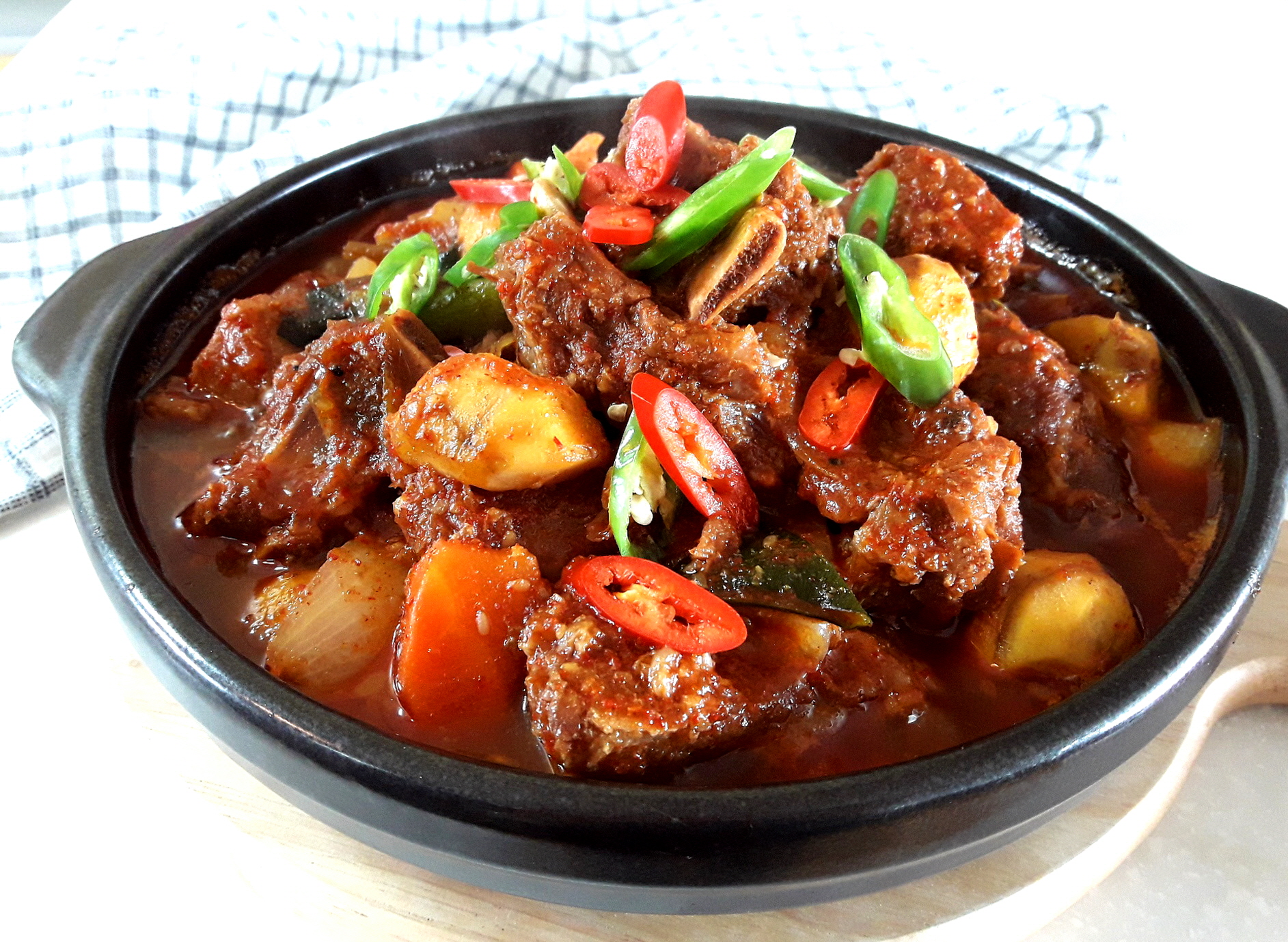

Spicy Galbijjim is a Korean braised pork rib dish made with pork ribs, potatoes, onion, green onion, garlic, soy sauce, gochujang, gochugaru, sesame oil, and a sweet-spicy seasoning sauce.
This dish is rich, spicy, savory, slightly sweet, and deeply satisfying. The pork ribs are first soaked to remove blood, briefly boiled, rinsed clean, and then simmered with a bold red sauce until tender.
It is perfect as a rice side dish, a hearty dinner dish, or a spicy Korean drinking food served with soju.
What is Spicy Galbijjim?
Galbijjim is a Korean braised rib dish.
The word “galbi” means ribs, and “jjim” refers to a Korean braised or steamed dish cooked slowly with seasoning.
Traditional galbijjim is often soy sauce-based and mildly sweet, but this version is spicy. It uses gochujang and gochugaru to create a bold, spicy red sauce that coats the pork ribs beautifully.
Spicy pork galbijjim is especially good when you want something hearty, flavorful, and satisfying with rice.
Recipe Information
Prep Time: 30 minutes
Cook Time: 60 minutes
Total Time: 90 minutes
Servings: 2
Difficulty: Easy to Moderate
Cuisine: Korean
Main Ingredient: Pork ribs
Best Served With: Steamed rice or soju
Ingredients
Main Ingredients
900g pork ribs
1 potato
1 onion
1 green onion
Water, as needed
Spicy Sauce Ingredients
7 tbsp soy sauce
2 tbsp minced garlic
4 tbsp gochugaru
4 tbsp gochujang
1 tbsp oligosaccharide syrup or corn syrup
2 tbsp sugar
2 tbsp sesame oil
1/2 tbsp black pepper
Optional Ingredient
Cheongyang chili pepper, to taste
Ingredient Notes
Pork Ribs
Pork ribs are the main ingredient of this dish.
Soaking them in water helps remove excess blood and gives the final dish a cleaner taste.
Briefly boiling and rinsing the ribs before braising is also important because it removes impurities and improves the flavor of the sauce.
Potato
Potato absorbs the spicy sauce and becomes soft and flavorful.
Add it after the pork has simmered for a while so it does not break apart too early.
Onion
Onion adds natural sweetness to the sauce.
It also softens during cooking and blends into the braising liquid.
Green Onion
Green onion adds aroma and freshness.
Add it near the end so it does not lose all of its flavor.
Gochujang
Gochujang gives this dish its deep spicy, savory, and slightly sweet flavor.
It creates the base of the red braising sauce.
Gochugaru
Gochugaru adds extra heat and a bright red color.
Use Korean red pepper flakes for the best result.
Soy Sauce
Soy sauce provides saltiness and savory depth.
Because the sauce reduces as it cooks, taste near the end before adding any extra seasoning.
Sesame Oil
Sesame oil adds nutty aroma and richness.
It makes the spicy sauce taste deeper and more rounded.
How to Make Spicy Galbijjim
Step 1: Soak the Pork Ribs
Place the pork ribs in a large bowl.
Cover them with cold water.
Let them soak to remove excess blood.
If the water becomes very red, change the water once or twice.
This step helps the final dish taste cleaner.
Step 2: Prepare the Vegetables
Cut the potato into large chunks.
Cut the onion into large pieces.
Slice the green onion into large pieces.
If using Cheongyang chili peppers, slice them as well.
Step 3: Make the Spicy Sauce
In a mixing bowl, combine:
- 7 tbsp soy sauce
- 2 tbsp minced garlic
- 4 tbsp gochugaru
- 4 tbsp gochujang
- 1 tbsp oligosaccharide syrup
- 2 tbsp sugar
- 2 tbsp sesame oil
- 1/2 tbsp black pepper
Mix well until the sauce becomes smooth and evenly combined.
Step 4: Parboil the Pork Ribs
Bring a pot of water to a boil.
Add the soaked pork ribs.
Boil for about 5 minutes.
This removes impurities and excess foam from the meat.
Step 5: Rinse the Pork Ribs
Drain the boiled pork ribs in a strainer.
Rinse them under clean water.
Remove any remaining foam or impurities from the surface.
Step 6: Start Braising
Place the rinsed pork ribs in a clean pot.
Add the spicy sauce.
Add sliced Cheongyang chili pepper if you want extra heat.
Pour in enough water to fully cover the pork ribs.
Step 7: Boil First Over High Heat
Turn the heat to high.
Bring everything to a strong boil.
Once it starts boiling, cover the pot with a lid.
Reduce the heat to medium.
Simmer for about 20 minutes.
Step 8: Add the Potato
Open the lid.
Add the potato chunks.
Continue simmering for about 10 minutes.
The potato should become tender but not completely broken apart.
Step 9: Add Onion and Green Onion
Add the onion and green onion.
Simmer for another 5 to 10 minutes.
Cook until the pork is tender and the sauce has reduced to a rich, spicy glaze.
Step 10: Reduce the Sauce
Continue cooking until the sauce thickens slightly.
The sauce should coat the pork ribs well.
If there is too much liquid, simmer uncovered for a few more minutes.
Step 11: Serve
Turn off the heat.
Transfer the Spicy Galbijjim to a serving dish.
Serve hot with steamed rice.
Pro Tips
Soak the Ribs First
Soaking the pork ribs removes blood and helps prevent a strong pork smell.
This step gives the dish a cleaner flavor.
Parboil and Rinse the Meat
Do not skip the quick boiling step.
Boiling the pork ribs for about 5 minutes and rinsing them removes impurities and makes the sauce cleaner.
Add Potato Later
If you add the potato too early, it may break apart before the pork becomes tender.
Add it after the pork has already simmered for about 20 minutes.
Use Enough Water at First
The pork ribs should be covered with water at the beginning of braising.
As the dish cooks, the liquid will reduce and become a thicker sauce.
Simmer Until the Sauce Reduces
Spicy Galbijjim tastes best when the sauce reduces and clings to the ribs.
Do not stop cooking too early if the sauce still looks watery.
Make It Spicier
For a stronger spicy flavor, add sliced Cheongyang chili peppers or a little extra gochugaru.
What to Serve with Spicy Galbijjim
Spicy Galbijjim pairs well with:
- Steamed white rice
- Kimchi
- Kongnamul Guk
- Miyeokguk
- Korean pickled onions
- Musaengchae
- Gyeran Jjim
- Gamja Jorim
- Eomuk Bokkeum
- Lettuce wraps
- Soju
It is especially good with rice because the spicy sauce is rich and flavorful.
Storage Tips
Store leftover Spicy Galbijjim in an airtight container in the refrigerator.
It is best eaten within 2 to 3 days.
To reheat, warm it in a pot over low to medium heat.
Add a small splash of water if the sauce has thickened too much.
The flavor often becomes deeper after resting overnight.
Freezing is possible, but the potato texture may become soft after thawing.
Frequently Asked Questions
Can I make this less spicy?
Yes.
Reduce the gochugaru and gochujang slightly.
You can also skip Cheongyang chili peppers if using them.
Can I use beef ribs instead of pork ribs?
Yes, but the cooking time may be longer.
Beef ribs usually need more simmering time to become tender.
Why do I need to boil the pork ribs first?
Parboiling removes impurities, blood, and excess odor.
It helps the final sauce taste cleaner.
Can I add more vegetables?
Yes.
Carrot, mushrooms, Korean radish, or sweet potato can be added.
Add softer vegetables later so they do not fall apart.
Why is my pork tough?
The pork may need more cooking time.
Continue simmering until the meat becomes tender.
Add more water if the sauce reduces too quickly.
Can I make this ahead of time?
Yes.
Spicy Galbijjim can be made ahead and reheated.
The flavor becomes deeper as the sauce absorbs into the meat.
What can I use instead of oligosaccharide syrup?
You can use corn syrup, Korean cooking syrup, honey, or a little extra sugar.
Syrup helps give the sauce a glossy finish.
Final Thoughts
Spicy Galbijjim is a bold and satisfying Korean braised pork rib dish made with a spicy gochujang-based sauce.
With pork ribs, potato, onion, green onion, garlic, soy sauce, gochugaru, gochujang, sesame oil, and a little sweetness, this dish becomes rich, spicy, savory, and perfect with rice.
The key is to soak the ribs, parboil and rinse them, simmer them slowly with the sauce, and reduce the liquid until the sauce coats the meat.
If you want a spicy Korean pork rib dish that works as both a hearty meal and a drinking food, this Spicy Galbijjim recipe is a perfect choice.
답글 남기기