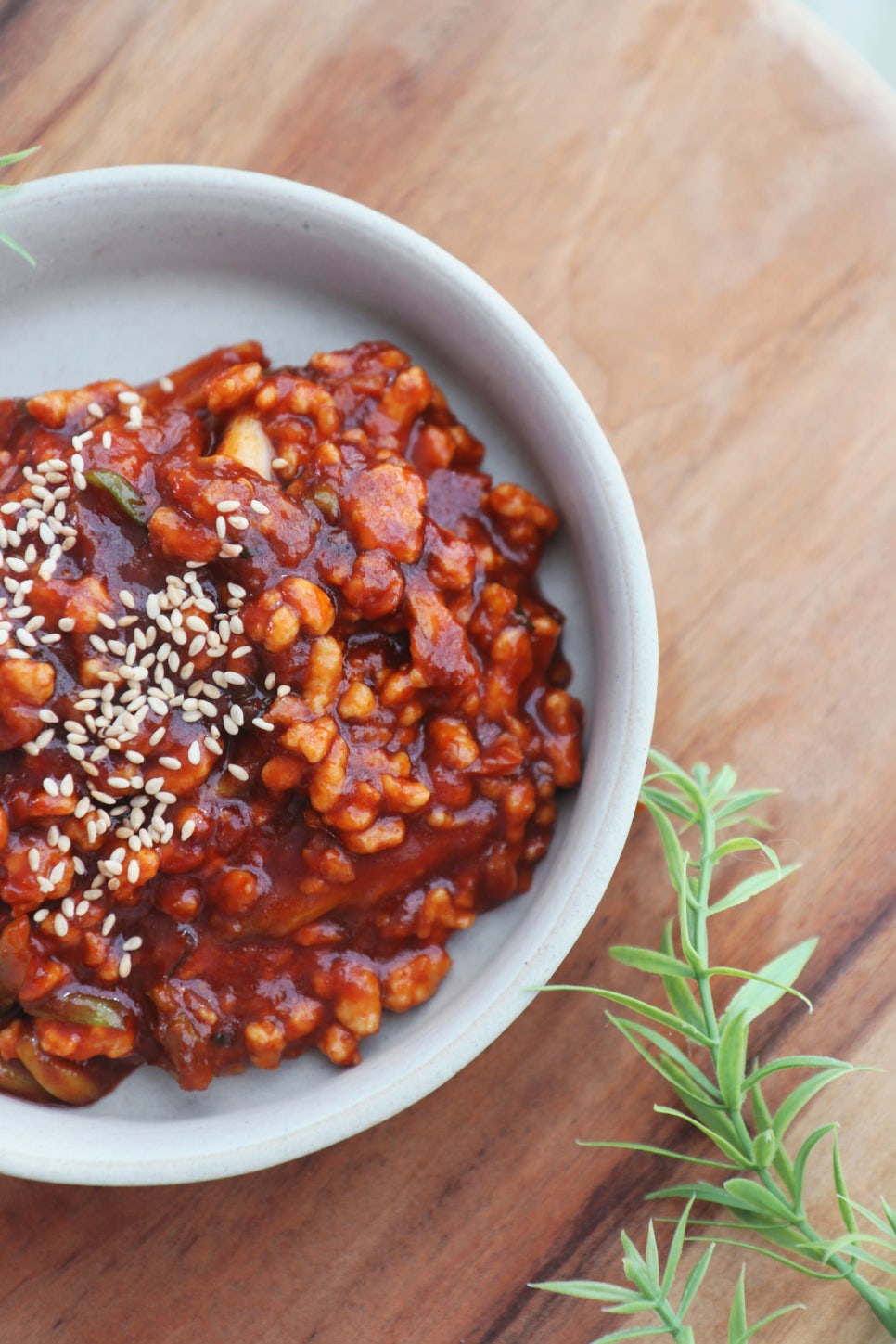

Bokkeum Gochujang is a Korean stir-fried gochujang sauce made with ground beef, gochujang, onion, green onion, garlic, sugar, soy sauce, and oil.
This is one of the most useful Korean sauces to keep in the refrigerator. Once made, you can enjoy it with rice, bibimbap, lettuce wraps, cabbage wraps, noodles, or simple vegetable side dishes.
The sauce is savory, spicy, slightly sweet, and rich. Because the vegetables and beef are cooked down slowly, the flavor becomes deeper and the texture becomes thick enough to mix easily with rice.
What is Bokkeum Gochujang?
Bokkeum Gochujang means Korean stir-fried gochujang.
“Bokkeum” means stir-fried, and “gochujang” is Korean red chili paste. This dish is made by stir-frying aromatics, ground meat, garlic, sugar, soy sauce, and gochujang until the sauce becomes thick and concentrated.
It is commonly used as a ready-to-eat Korean sauce for bibimbap, rice bowls, wraps, and quick meals.
If you keep a container of bokkeum gochujang in the refrigerator, you can make a simple meal anytime by mixing it with warm rice, sesame oil, and a fried egg.
Recipe Information
Prep Time: 10 minutes
Cook Time: 20 minutes
Total Time: 30 minutes
Servings: 6 or more
Difficulty: Easy
Cuisine: Korean
Main Ingredient: Gochujang and ground beef
Best Served As: Korean sauce or side dish
Ingredients
Main Ingredients
1 cup ground beef
2 cups gochujang
3 cups finely chopped onion
1 cup finely chopped green onion
1/3 cup minced garlic
1 cup olive oil or neutral cooking oil
Seasoning
1/2 cup sugar
2 tbsp soy sauce
Ingredient Notes
Gochujang
Gochujang is the main ingredient of this recipe.
It gives the sauce its spicy, savory, slightly sweet, and fermented Korean flavor.
Because gochujang brands vary in saltiness and sweetness, taste the sauce near the end and adjust carefully.
Ground Beef
Ground beef adds richness and savory depth.
It also makes the sauce more filling, so it works well as a quick rice topping.
Ground pork can also be used instead of beef.
Onion
Onion adds natural sweetness and moisture.
Use finely chopped onion so it cooks down smoothly into the sauce.
Green Onion
Green onion adds aroma and a savory base flavor.
It becomes sweeter and deeper as it cooks in oil.
Garlic
Garlic gives the sauce strong Korean-style depth.
Add it with the ground beef so it cooks into the sauce without burning.
Sugar
Sugar balances the saltiness and spiciness of the gochujang.
It also helps the sauce become glossy and slightly caramelized.
Soy Sauce
Soy sauce adds savory depth.
For extra flavor, pour the soy sauce along the edge of the pan so it lightly sizzles before mixing into the sauce.
Oil
Oil helps cook the onion, green onion, beef, and gochujang evenly.
It also helps preserve the sauce and gives it a rich texture.
How to Make Bokkeum Gochujang
Step 1: Prepare the Ingredients
Finely chop the onion.
Finely chop the green onion.
Prepare the ground beef, minced garlic, gochujang, sugar, soy sauce, and oil.
Step 2: Stir-Fry Onion and Green Onion
Heat a pan over low heat.
Add 1 cup of oil.
Add 3 cups finely chopped onion and 1 cup finely chopped green onion.
Stir-fry over medium-low heat until the onion and green onion soften and become fragrant.
Step 3: Add Ground Beef and Garlic
When the onion and green onion become aromatic, add 1 cup ground beef.
Add 1/3 cup minced garlic.
Stir-fry over medium heat.
Break up the beef as it cooks so it does not clump together.
Step 4: Cook Off the Moisture
As the beef and vegetables cook, they will release moisture.
Continue stir-frying over medium heat until most of the moisture evaporates.
The mixture should look less watery, with oil remaining around the ingredients.
This step is important because removing moisture helps the sauce last longer and taste deeper.
Step 5: Add Sugar
When most of the moisture has cooked off, add 1/2 cup sugar.
Stir-fry well so the sugar dissolves and coats the beef and vegetables.
The mixture will become slightly glossy.
Step 6: Add Gochujang and Soy Sauce
Add 2 cups gochujang.
Add 2 tablespoons soy sauce.
For deeper flavor, pour the soy sauce along the edge of the pan so it sizzles slightly before mixing.
Stir everything together until the gochujang is fully combined with the beef and vegetables.
Step 7: Stir-Fry Slowly
Reduce the heat to low.
Continue stir-frying for at least 10 minutes.
Stir often so the sauce does not stick to the bottom of the pan.
The sauce should become thicker, darker, and slightly stiff.
Step 8: Reduce Until Thick
Keep cooking until most of the moisture is gone.
The finished bokkeum gochujang should look thick, glossy, and concentrated.
It should not look watery.
This helps the sauce keep better in the refrigerator and gives it a deeper flavor.
Step 9: Cool Completely
Transfer the stir-fried gochujang to a bowl or container.
Let it cool completely at room temperature.
Step 10: Store and Serve
Once cooled, transfer it to an airtight container.
Store in the refrigerator.
Serve with rice, bibimbap, lettuce wraps, cabbage wraps, noodles, or Korean vegetable side dishes.
Pro Tips
Cook Out the Moisture Well
This is the most important step.
If too much moisture remains, the sauce may spoil faster and taste less concentrated.
Cook slowly until the sauce becomes thick and slightly stiff.
Use Low Heat After Adding Gochujang
Gochujang can burn easily.
After adding gochujang, reduce the heat and stir constantly.
Break Up the Ground Beef
Ground beef can clump together while cooking.
Use a spoon or spatula to break it into small pieces so it mixes evenly into the sauce.
Sizzle the Soy Sauce on the Pan Edge
Adding soy sauce along the hot edge of the pan creates a deeper toasted soy sauce aroma.
This small step makes the sauce taste richer.
Cool Before Storing
Do not close the lid while the sauce is still hot.
Cool it completely first, then store it in the refrigerator.
Use Clean Utensils
Always use a clean spoon when taking bokkeum gochujang from the container.
This helps it last longer.
How to Use Bokkeum Gochujang
Bokkeum Gochujang is very versatile.
You can use it in many simple Korean meals:
- Mix with warm rice and sesame oil
- Add to bibimbap
- Serve with lettuce wraps
- Serve with steamed cabbage wraps
- Add to rice bowls
- Use as a topping for noodles
- Serve with fried eggs
- Pair with grilled meat
- Add to vegetable side dishes
- Use as a quick spicy sauce for lunch boxes
For a simple meal, mix warm rice with bokkeum gochujang, sesame oil, sesame seeds, and a fried egg.
What to Serve with Bokkeum Gochujang
Bokkeum Gochujang pairs well with:
- Steamed white rice
- Fried egg
- Bibimbap
- Lettuce wraps
- Steamed cabbage wraps
- Tofu Ssamjang with Cabbage Wraps
- Kkakdugi
- Onion Geotjeori
- Oi Muchim
- Musaengchae
- Kongnamul Guk
- Miyeokguk
- Bulgogi
- Galbijjim
- Samgyeopsal
It is especially useful when you want a quick Korean meal without cooking many side dishes.
Storage Tips
Store bokkeum gochujang in an airtight container in the refrigerator.
It is best eaten within about 3 weeks.
Let the sauce cool completely before storing.
Because this sauce contains beef and vegetables, always keep it refrigerated and use a clean spoon each time.
If the sauce smells sour, looks moldy, or changes texture strangely, discard it.
Freezing is possible, but the texture may change slightly after thawing. For best flavor, refrigerate and use within a few weeks.
Frequently Asked Questions
Can I use pork instead of beef?
Yes.
Ground pork can be used instead of ground beef.
Pork gives the sauce a slightly richer and softer flavor.
Can I make this without meat?
Yes.
You can skip the ground beef and add more onion, mushrooms, or finely chopped tofu.
However, the flavor and storage time may be different.
Is bokkeum gochujang very spicy?
It depends on the gochujang you use.
This sauce is spicy, savory, and slightly sweet, but not extremely spicy.
For a milder version, use a mild gochujang and add a little more onion.
Why is my sauce watery?
The vegetables and meat may not have been cooked long enough.
Continue stir-frying over low heat until the moisture evaporates and the sauce becomes thick.
Why did my gochujang burn?
The heat was probably too high after adding the gochujang.
Gochujang burns easily, so use low heat and stir often.
How long does bokkeum gochujang last?
It can last about 2 to 3 weeks in the refrigerator if cooked down well and handled with clean utensils.
Because it contains meat, do not leave it at room temperature.
Can I use it for bibimbap?
Yes.
Bokkeum gochujang is excellent for bibimbap.
It adds meat, spice, sweetness, and deep flavor in one spoonful.
Can I reduce the sugar?
Yes.
You can reduce the sugar slightly if you prefer a less sweet sauce.
However, sugar balances the saltiness and spiciness of the gochujang.
Final Thoughts
Bokkeum Gochujang is a practical and flavorful Korean stir-fried gochujang sauce that is perfect to keep in the refrigerator.
With ground beef, gochujang, onion, green onion, garlic, sugar, soy sauce, and oil, this sauce becomes rich, spicy, savory, slightly sweet, and deeply satisfying.
The key is to cook the vegetables and beef until the moisture evaporates, add the gochujang, then stir-fry slowly over low heat until the sauce becomes thick and concentrated.
If you want an easy Korean sauce that can turn plain rice into a satisfying meal, this Bokkeum Gochujang recipe is an excellent choice.
답글 남기기