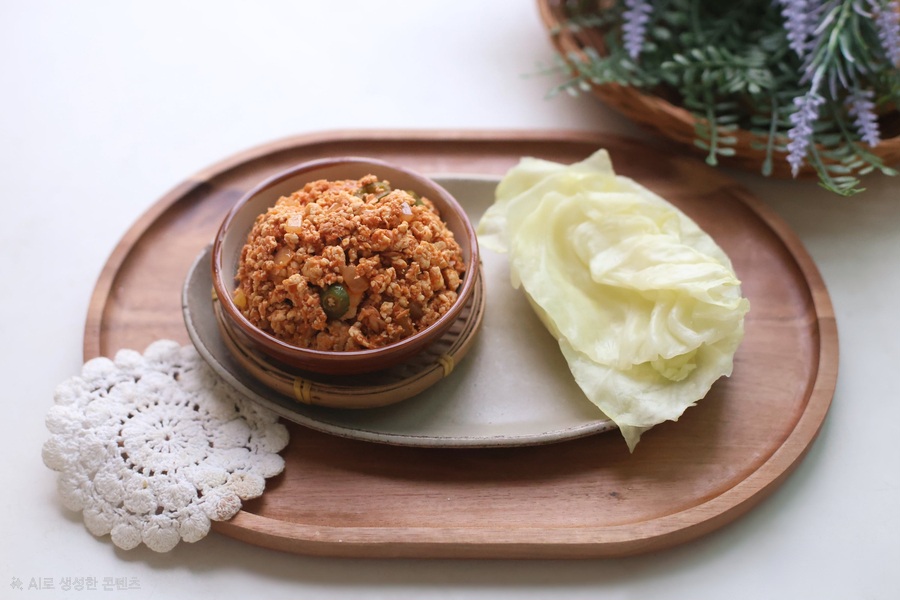

Tofu Ssamjang with Cabbage Wraps is a simple Korean home-style dish made with tofu, zucchini, onion, doenjang, gochujang, ssamjang, perilla oil, and tender steamed or boiled cabbage leaves.
This recipe is savory, nutty, hearty, and easy to make. The tofu ssamjang works like a thick Korean dipping sauce, while the cabbage leaves are used as soft wraps for rice and sauce.
When you do not want to prepare many side dishes, this dish is an excellent option. With warm rice, tender cabbage, and rich tofu ssamjang, you can make a satisfying Korean meal with only a few ingredients.
What is Tofu Ssamjang with Cabbage Wraps?
Tofu Ssamjang is a Korean dipping sauce made by cooking tofu with Korean soybean paste, chili paste, vegetables, and oil.
“Ssamjang” is a Korean wrap sauce usually served with lettuce wraps, cabbage wraps, grilled meat, and rice. This version adds tofu, zucchini, and onion, making it softer, more filling, and more suitable as a light meal.
The cabbage leaves are boiled or steamed until tender, then served with rice and tofu ssamjang. To eat, place rice on a cabbage leaf, add a spoonful of tofu ssamjang, wrap it, and enjoy it in one bite.
Recipe Information
Prep Time: 10 minutes
Cook Time: 20 minutes
Total Time: 30 minutes
Servings: 4
Difficulty: Easy
Cuisine: Korean
Main Ingredient: Tofu and cabbage
Best Served As: Korean side dish or light meal
Ingredients
For the Tofu Ssamjang
1/3 zucchini
1/2 onion
1/2 block tofu
1 cup water
Seasoning
2 tbsp doenjang
1 tbsp gochujang
1/2 tbsp ssamjang
1 tbsp perilla oil
For the Cabbage Wraps
1/2 cabbage
Water, as needed
A pinch of salt, optional
Ingredient Notes
Tofu
Tofu makes the ssamjang thick, soft, and filling.
Firm tofu works best if you want some texture. Soft tofu can also be used if you prefer a smoother sauce.
Crush the tofu while cooking so it blends into the sauce and absorbs the seasoning.
Cabbage
Cabbage becomes sweet and tender when boiled or steamed.
It works well as a Korean wrap because the leaves are soft enough to fold around rice and sauce.
Do not overcook the cabbage. It should be tender, but not mushy.
Zucchini
Zucchini adds mild sweetness and a soft texture.
Chop it finely so it cooks quickly and blends well into the tofu ssamjang.
Onion
Onion adds natural sweetness and depth.
Cook it until translucent before adding the sauce ingredients.
Doenjang
Doenjang is Korean fermented soybean paste.
It gives the tofu ssamjang a deep, savory, earthy flavor.
Gochujang
Gochujang adds mild heat, color, and a slightly sweet flavor.
It balances the salty and rich flavor of the doenjang.
Ssamjang
Ssamjang adds a ready-made Korean wrap sauce flavor.
Only a small amount is needed because doenjang and gochujang already provide strong flavor.
Perilla Oil
Perilla oil gives this dish a deep nutty aroma.
It works especially well with tofu, doenjang, and cabbage.
If you do not have perilla oil, sesame oil can be used, but the flavor will be slightly different.
How to Make Tofu Ssamjang with Cabbage Wraps
Step 1: Prepare the Vegetables
Finely chop the zucchini.
Finely chop the onion.
Small pieces are better because this recipe is served as a dipping sauce for cabbage wraps.
Step 2: Stir-Fry the Vegetables
Place a pan over medium heat.
Add 1 tablespoon of perilla oil.
Add the chopped zucchini and onion.
Stir-fry until the onion becomes slightly translucent.
This step brings out the natural sweetness of the vegetables and gives the sauce a deeper flavor.
Step 3: Add Water
Pour in 1 cup of water.
Stir gently.
The water helps dissolve the Korean pastes and creates the base of the sauce.
Step 4: Add the Seasonings
Add:
- 2 tbsp doenjang
- 1 tbsp gochujang
- 1/2 tbsp ssamjang
Stir well until the pastes dissolve into the water.
Step 5: Add the Tofu
Add 1/2 block of tofu to the pan.
Use a spoon or spatula to crush the tofu while stirring.
The tofu should break into small pieces and mix evenly into the sauce.
Step 6: Simmer the Tofu Ssamjang
Let the sauce simmer over medium heat.
Stir occasionally so it does not stick to the bottom of the pan.
Cook until the liquid reduces and the sauce becomes thick but still moist.
The final texture should be soft, chunky, and spoonable.
Step 7: Prepare the Cabbage
Remove any damaged outer leaves from the cabbage.
Cut the cabbage into large pieces, or separate the leaves one by one.
Rinse the cabbage well under running water.
Step 8: Boil the Cabbage
Bring a pot of water to a boil.
Add a pinch of salt if desired.
Add the cabbage leaves.
Boil for about 4 to 6 minutes, or until the leaves become tender but still slightly firm.
If the cabbage leaves are very thick, cook them a little longer.
Step 9: Drain the Cabbage
Remove the cabbage from the pot.
Drain well in a strainer.
Let it cool slightly before serving.
If the cabbage leaves hold too much water, gently press out the excess moisture.
Step 10: Serve
Serve the boiled cabbage leaves with warm rice and tofu ssamjang.
To eat, place a spoonful of rice on a cabbage leaf.
Add tofu ssamjang on top.
Wrap it and enjoy in one bite.
Pro Tips
Chop the Vegetables Finely
Finely chopped zucchini and onion blend better into the sauce.
This makes the tofu ssamjang easier to spoon into cabbage wraps.
Cook the Onion Until Translucent
Do not rush the first stir-fry step.
Cooking the onion first brings out natural sweetness and balances the salty soybean paste.
Crush the Tofu While Cooking
Crushing the tofu in the pan helps it absorb the seasoning.
It also gives the sauce a hearty texture.
Do Not Make the Sauce Too Dry
Tofu ssamjang should be thick but still moist.
If it becomes too dry, add a small splash of water and stir again.
Do Not Overcook the Cabbage
The cabbage should be soft enough to wrap, but not mushy.
Boil it just until tender so it keeps a pleasant texture.
Drain the Cabbage Well
Watery cabbage can make the wraps taste bland.
After boiling, drain the cabbage well before serving.
Taste Before Serving
Doenjang and ssamjang can vary in saltiness by brand.
Taste the sauce near the end and add a little water if it tastes too salty.
What to Serve with Tofu Ssamjang and Cabbage Wraps
Tofu Ssamjang with Cabbage Wraps pairs well with:
- Steamed white rice
- Kimchi
- Kkakdugi
- Oi Muchim
- Musaengchae
- Kongnamul Guk
- Miyeokguk
- Gyeran Jjim
- Dubu Jorim
- Bulgogi
- Samgyeopsal
- Galbijjim
- Korean BBQ
This dish can be served as a side dish, but it is also filling enough for a simple Korean meal.
Storage Tips
Store leftover tofu ssamjang and boiled cabbage separately.
Keep tofu ssamjang in an airtight container in the refrigerator and eat it within 2 to 3 days.
Keep boiled cabbage in a separate airtight container and eat it within 2 days.
To reheat tofu ssamjang, warm it gently in a small pan over low heat or microwave it briefly.
If the sauce becomes too thick after refrigeration, add a small splash of water and stir before reheating.
Freezing is not recommended because tofu and cabbage can become watery after thawing.
Frequently Asked Questions
Can I steam the cabbage instead of boiling it?
Yes.
You can steam the cabbage for about 7 to 10 minutes, or until tender.
Steaming helps the cabbage keep more sweetness and texture.
Can I use sesame oil instead of perilla oil?
Yes.
Sesame oil can be used if you do not have perilla oil.
However, perilla oil gives a deeper nutty flavor that works especially well with tofu and doenjang.
Can I make this less salty?
Yes.
Use slightly less doenjang or add more tofu and vegetables.
You can also add a little more water if the sauce tastes too salty.
Can I make this spicy?
Yes.
Add more gochujang or a little gochugaru.
For extra heat, add chopped Cheongyang chili pepper.
What kind of tofu should I use?
Firm tofu works best because it gives the sauce more texture.
Soft tofu can also be used if you prefer a smoother sauce.
Can I eat this without cabbage?
Yes.
Tofu ssamjang can be served with lettuce, perilla leaves, cucumber, carrots, or simply with rice.
Is this a side dish or a sauce?
It can be both.
It works as a dipping sauce for wraps, but because it contains tofu and vegetables, it can also be eaten like a hearty Korean side dish.
Can I make this ahead of time?
Yes.
You can make the tofu ssamjang ahead and store it in the refrigerator.
Boil the cabbage on the day you plan to serve it for the best texture.
Final Thoughts
Tofu Ssamjang with Cabbage Wraps is a simple, hearty, and satisfying Korean dish made with tofu, zucchini, onion, doenjang, gochujang, ssamjang, perilla oil, and tender boiled cabbage.
The tofu ssamjang is savory, nutty, and rich, while the cabbage leaves are soft, sweet, and perfect for wrapping rice. Together, they make an easy Korean meal that does not require many side dishes.
The key is to cook the vegetables in perilla oil, simmer the tofu ssamjang until thick and spoonable, and boil the cabbage just until tender.
If you want an easy Korean side dish or light meal that is healthy, comforting, and full of flavor, this Tofu Ssamjang with Cabbage Wraps recipe is an excellent choice.
답글 남기기