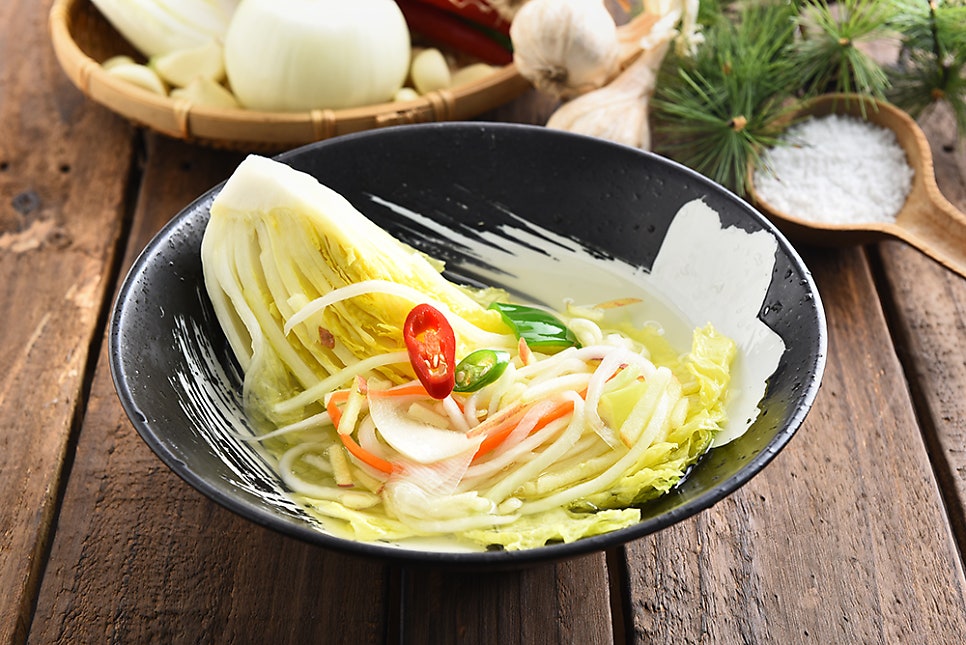

Baek Kimchi is a mild Korean white kimchi made with napa cabbage, Korean radish, carrot, green onion, red chili pepper, pear, onion, garlic, ginger, rice, and sea salt.
Unlike spicy red kimchi, baek kimchi does not use gochugaru. This version is also made without fish sauce or salted seafood, giving it a clean, refreshing, lightly sweet, and crisp flavor.
It takes some preparation, but the method is easier than it looks. Once the cabbage is salted and the vegetables are prepared, the seasoning broth comes together simply with blended rice, pear, onion, garlic, and ginger.
What is Baek Kimchi?
Baek Kimchi means Korean white kimchi.
“Baek” means white, and “kimchi” refers to Korean fermented vegetables. Unlike regular napa cabbage kimchi, baek kimchi is not red or spicy. It is made with a clear, refreshing kimchi liquid and mild vegetable filling.
This kimchi is crisp, cool, lightly sweet, and slightly tangy after fermentation. It is especially good for people who prefer mild kimchi or want a clean side dish without strong fish sauce flavor.
Baek kimchi is often served with rice, Korean soups, grilled meat, braised dishes, and holiday meals.
Recipe Information
Prep Time: 1 hour
Salting Time: 5 to 6 hours
Fermentation Time: 1 to 2 days
Total Time: 2 days, including fermentation
Servings: 6 or more
Difficulty: Easy to Moderate
Cuisine: Korean
Main Ingredient: Napa cabbage
Best Served As: Korean side dish
Ingredients
Main Ingredients
1 napa cabbage
1/2 Korean radish
10 stalks green onion or Korean chives
1/2 carrot
4 red chili peppers
For Salting the Cabbage
About 8 handfuls coarse sea salt
Water, as needed
For the Rice Base
2/3 bowl cooked rice
About 1 1/2 large bowls water
For the White Kimchi Seasoning
1 onion
1 pear
12 garlic cloves
2 tbsp ginger syrup
2 tbsp coarse sea salt
Optional Substitute
If you do not have ginger syrup, use a small piece of fresh ginger instead.
Ingredient Notes
Napa Cabbage
Napa cabbage is the main ingredient of baek kimchi.
Cut it into quarters and salt the thick stem parts well. Proper salting helps the cabbage soften, season evenly, and ferment better.
Korean Radish
Korean radish adds crunch and refreshing sweetness.
Slice it into thin strips and salt it lightly before adding it to the filling.
Carrot
Carrot adds color and a gentle sweetness.
Salt it briefly until it softens slightly.
Green Onion or Korean Chives
Green onion gives the kimchi a fresh aroma.
You can also use Korean chives if available.
Red Chili Pepper
Red chili pepper adds color without making the kimchi too spicy.
Remove the seeds before slicing for a cleaner and milder flavor.
Cooked Rice
Cooked rice helps create the kimchi liquid.
It works like a simple rice paste and helps support fermentation.
You can boil the rice with water first, or blend it directly if you want a simpler version.
Pear
Pear adds natural sweetness and a refreshing flavor.
It also makes the kimchi liquid taste clean and bright.
Onion
Onion adds sweetness and depth to the seasoning liquid.
It blends well with pear, garlic, and rice.
Garlic
Garlic gives the kimchi savory depth.
Because this is a mild white kimchi, garlic should be balanced and not overpowering.
Ginger Syrup
Ginger syrup adds gentle warmth, sweetness, and aroma.
If you do not have ginger syrup, use a small piece of fresh ginger instead.
Coarse Sea Salt
Sea salt is used for salting the cabbage and seasoning the kimchi liquid.
Adjust the final salt level carefully because the salted cabbage already contains some salt.
How to Make Baek Kimchi
Step 1: Cut the Napa Cabbage
Cut the top part of the napa cabbage with a knife, then gently split it in half by hand.
Cut each half again to make 4 quarters.
Splitting the cabbage by hand helps keep the leaves cleaner and less damaged.
Step 2: Salt the Cabbage
Sprinkle coarse sea salt between the thick cabbage leaves, especially near the stem parts.
Place the cabbage in a large bowl or container.
Add about one large bowl of water to help the salt spread.
Let the cabbage salt for about 5 to 6 hours, or until the thick stems become flexible.
Turn the cabbage once or twice during salting so it salts evenly.
Step 3: Make the Rice Base
Place 2/3 bowl of cooked rice and about 1 1/2 large bowls of water in a pot.
Boil until the rice softens and the liquid becomes slightly cloudy and thick.
Turn off the heat and let it cool.
This rice base helps the kimchi liquid ferment and gives it a smoother flavor.
If you want a simpler method, you can skip boiling and blend the cooked rice directly with the seasoning ingredients.
Step 4: Salt the Radish and Carrot
Julienne the Korean radish.
Julienne the carrot.
Lightly salt the radish and carrot until they soften slightly.
They do not need to be fully wilted. A slightly flexible texture is enough.
Step 5: Prepare the Red Chili Pepper and Green Onion
Remove the seeds from the red chili peppers.
Slice them into thin strips.
Cut the green onions into bite-sized lengths.
Set everything aside.
Step 6: Blend the Seasoning Liquid
In a blender, combine the cooled rice base with:
- 1 onion
- 1 pear
- 12 garlic cloves
- 2 tbsp ginger syrup
Blend until smooth.
If your blender is small, blend in batches.
Step 7: Season the Kimchi Liquid
Pour the blended mixture into a large bowl.
Add 2 tablespoons of coarse sea salt.
Stir well until the salt dissolves.
Taste the liquid.
It should be pleasantly seasoned but not overly salty, because the salted cabbage will also add saltiness.
If it tastes bland, add a little more sea salt.
If it needs more sweetness, blend in a little more pear rather than adding sugar.
Step 8: Make the Filling
In a large bowl, combine:
- Salted radish
- Salted carrot
- Sliced red chili pepper
- Green onion
Add some of the blended seasoning liquid.
Mix gently.
This becomes the vegetable filling for the cabbage.
Step 9: Rinse the Salted Cabbage
When the cabbage is properly salted, rinse it 3 times under clean water.
Drain well.
The cabbage should be flexible but not mushy.
Let it sit in a strainer for a while to remove excess water.
Step 10: Fill the Cabbage
Place some of the vegetable filling between the cabbage leaves.
Focus on the thicker stem areas where the leaves overlap.
Do not overfill the cabbage.
A moderate amount of filling is enough for baek kimchi because the clear liquid is also important.
Step 11: Pack into a Kimchi Container
Place the filled cabbage quarters into a kimchi container.
Pour the remaining seasoning liquid over the cabbage.
Press down gently so the cabbage is covered by the liquid as much as possible.
Cover the top with a clean disposable plastic sheet or wrap before closing the lid if desired.
This helps keep the kimchi surface clean during fermentation.
Step 12: Ferment at Room Temperature
Leave the kimchi at room temperature for about 1 to 2 days.
The exact time depends on the temperature of your kitchen.
After about 2 days, open the container and check the flavor.
When it tastes lightly tangy, sweet, and refreshing, move it to the refrigerator.
Step 13: Serve
Serve baek kimchi chilled.
Cut the cabbage into bite-sized pieces before serving.
Spoon a little of the refreshing kimchi liquid over the top.
Pro Tips
Salt the Cabbage Properly
The cabbage should become flexible but not too soft.
If the thick stem bends without snapping, it is ready.
Focus Salt on the Thick Stem Parts
The leafy parts salt quickly, but the thick white stem parts need more salt.
Sprinkle salt mainly near the stem area for even salting.
Rinse the Cabbage Well
Rinse the salted cabbage about 3 times.
This removes excess salt and keeps the final flavor clean.
Let the Cabbage Drain
Too much water on the cabbage can dilute the kimchi liquid.
Drain it well before adding the filling.
Use Pear for Natural Sweetness
Pear gives baek kimchi a clean, refreshing sweetness.
If the kimchi liquid needs more sweetness, add more pear instead of sugar.
Do Not Make It Too Salty
The cabbage is already salted, so the seasoning liquid should not be overly salty.
Taste carefully before packing the kimchi.
Ferment Slowly for Better Flavor
Baek kimchi tastes best when it ferments gently.
After 1 to 2 days at room temperature, move it to the refrigerator and let the flavor continue developing slowly.
What to Serve with Baek Kimchi
Baek Kimchi pairs well with:
- Steamed white rice
- Galbijjim
- Bulgogi
- Samgyeopsal
- Soy Sauce Braised Pork Back Ribs
- Spicy Galbijjim
- Tofu Ssamjang with Cabbage Wraps
- Kongnamul Guk
- Miyeokguk
- Doenjang Jjigae
- Kalguksu
- Japchae
- Gyeran Jjim
It is especially good with rich meat dishes because the clean and refreshing flavor balances heavy foods.
Storage Tips
Store baek kimchi in an airtight kimchi container in the refrigerator.
After the first room-temperature fermentation, keep it chilled.
It is best eaten within 2 to 3 weeks for a crisp and refreshing texture.
Always use clean utensils when taking kimchi from the container.
As it ferments, the flavor becomes more tangy and deeper.
Keep the cabbage covered with the kimchi liquid as much as possible to prevent drying.
Freezing is not recommended because the cabbage texture will become soft and watery after thawing.
Frequently Asked Questions
Is baek kimchi spicy?
No.
Baek kimchi is a mild white kimchi that does not use gochugaru.
Red chili pepper is used mostly for color and a light fresh aroma.
Can I make baek kimchi without fish sauce?
Yes.
This recipe is made without fish sauce or salted seafood.
It has a clean, mild, and refreshing flavor.
How long should I salt the cabbage?
Usually about 5 to 6 hours is enough, depending on the size and thickness of the cabbage.
The thick stem should become bendable.
Can I skip boiling the rice?
Yes.
You can blend cooked rice directly with the seasoning ingredients.
Boiling the rice first can make the mixture smoother and feel a little cleaner, but it is not required.
What can I use instead of ginger syrup?
Use a small piece of fresh ginger.
Blend it with the rice, pear, onion, and garlic.
Can I add sugar?
You can, but pear is better for baek kimchi.
Pear gives a more natural and refreshing sweetness.
How long should baek kimchi ferment?
Leave it at room temperature for about 1 to 2 days.
When it becomes lightly tangy, move it to the refrigerator.
Why is my baek kimchi too salty?
The cabbage may have been salted too heavily or not rinsed enough.
You can add a little cold water to the kimchi liquid to dilute the saltiness.
Why is my baek kimchi bland?
The seasoning liquid may need more salt, or the cabbage may not have been salted enough.
Add a little sea salt to the liquid and let it rest longer in the refrigerator.
Final Thoughts
Baek Kimchi is a clean, mild, and refreshing Korean white kimchi that can be made at home without fish sauce.
With napa cabbage, radish, carrot, green onion, red chili pepper, pear, onion, garlic, ginger, rice, and sea salt, this kimchi becomes crisp, lightly sweet, tangy, and cooling after fermentation.
The preparation may look detailed at first, but the process is simple when divided into steps: salt the cabbage, prepare the vegetables, blend the seasoning liquid, fill the cabbage, and ferment.
If you want a mild Korean kimchi that is refreshing, clean-tasting, and perfect with rice or rich Korean dishes, this Baek Kimchi recipe is an excellent choice.
답글 남기기